Perimenopause Supplements
Evidence-Based Options Worth the Hype

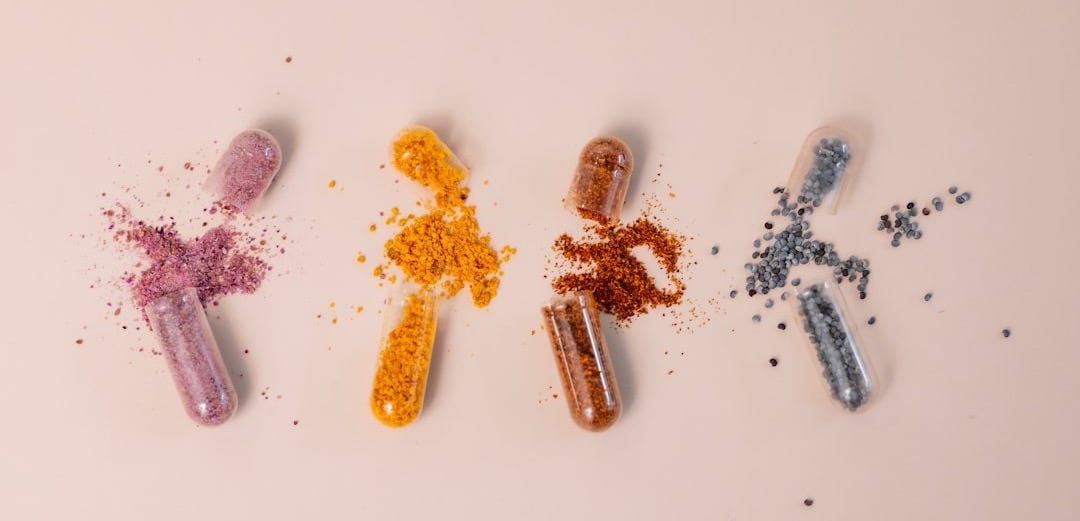
I love supplements.
Don’t get me wrong, nutrition is foundational. You can’t skip a healthy dietary pattern, and you certainly can’t out-supplement poor lifestyle habits. But supplements can be a sweet icing on the cake.
Nutrients can help fill dietary gaps or optimize levels when you need more. And specific herbs, phytonutrients, and nutraceuticals can target specific pathways, supporting health goals. As you age, systems decline, and supplements offer support.
Most days, I take some foundational supplements, including a multivitamin, fish oil, magnesium, vitamin D with K2, and a probiotic. I also take several targeted supplements to support my current hormonal landscape and individual health concerns.
I understand that not everyone is as enthusiastic about supplements as I am or wants to take a bunch of pills every day. It can be an investment, and sometimes it takes some experimentation to find what works for you. I’ve tried many things, and if I recommend something to a client, you can be sure I’ve tried it myself and have clinical experience to draw from.
In today’s article, I’m going to discuss a few supplements worth your attention during perimenopause, including a high-quality multivitamin, magnesium, and creatine. These are supplements I often recommend, have a high safety profile, and have documented benefits. They fall into the category of long-term, foundational support.
Important: Always discuss new supplements with your healthcare provider for personalized guidance, especially if you take any medication or have a medical condition.
Perimenopause Multivitamin
A quality multivitamin is an insurance policy for your daily micronutrient (vitamin and mineral) needs.
Most perimenopausal women do not meet the baseline dietary guidelines for key nutrients, including fiber, vitamin D, calcium, selenium, potassium, vitamin C, and vitamin E. [1]
Even with a nutrient-dense diet, it can still be challenging to meet your daily needs for each nutrient because of dietary variation and the modern food supply. And taking a multivitamin improves micronutrient status.
We don’t question a multivitamin for fertility (a prenatal), and it’s clear that key nutrients support fertility and pregnancy outcomes. [2, 3]
The same nutrients matter for women in perimenopause. While reproduction might not be the goal in midlife, supporting ovarian health means more benefits from your own hormone production, possibly for longer.
A recent study found that nutrient supplementation may delay the onset of menopause by slowing reproductive aging. Specific nutrients linked to this outcome include B vitamins, vitamin C, and antioxidants (zinc, selenium, vitamin A, and vitamin E), which are typically in multivitamins. Possible mechanisms include reduced oxidative stress, anti-inflammatory actions, hormone support, mitochondrial health, and DNA repair, all of which influence ovarian aging and may benefit long-term health. [4]
Beyond fertility, ovarian health, and menstrual cycle support, multivitamins support:
Not all multivitamins are created equal, and quality matters.
There are many supplemental forms of each nutrient, and some will have remarkably better absorption and bioavailability than others. You want the form of each nutrient that your body recognizes and can easily utilize, which is typically an active form. For example, look for methylfolate or folinic acid instead of folic acid, which is not a nature-identical form.
It’s also important to know if what’s in the multivitamin matches what’s on the label in terms of ingredients and dosages, and that there aren’t contaminants. Choosing a quality product from a reputable brand that conducts 3rd-party testing (and is transparent about the results) is crucial. So, while a multivitamin can be a great addition to your wellness plan, most supermarket options won’t meet the standard we are aiming for.
Multivitamin tips:
Choose a formula that fits your personal needs (I can help)
Choose a women’s multivitamin without iron and supplement iron separately only when indicated
One-a-day multivitamins are likely lacking in some minerals because they don’t fit in one capsule (I take a one-a-day option and then add some other nutrients separately)
You may need more vitamin D than what your multivitamin offers. Dose additional supplements to optimize blood levels
Magnesium for Perimenopause
Magnesium is a big molecule, and you’re probably not getting much in your multivitamin. And chances are that you’d benefit from more. I’ve had clients who start sleeping well, experience a reduction in migraines, lower blood pressure, become more regular, or reduce PMS symptoms just from this simple intervention.
Magnesium is naturally found in nuts, seeds, beans, fish, mineral water, and cacao (my favorite source). A true clinical deficiency is rare, but suboptimal levels (subclinical deficiency) are common because of diet quality, lower magnesium levels in agricultural soil, medication use, stress levels that increase the body’s demand for magnesium, and hormone status.
Fun fact: You may crave chocolate before or during your period because you need more magnesium.
Variations in estrogen levels, which can become more pronounced in perimenopause, affect how the body absorbs, distributes, and retains magnesium. And low levels of magnesium may impact perimenopausal symptoms, such as cramps and painful periods. [10]
Additionally, magnesium plays a role in body composition and metabolic resilience. Good magnesium status may help protect against visceral fat accumulation and associated inflammation that can occur in midlife. [10]
Magnesium is involved in over 600 enzymatic processes in the body and has far-reaching benefits for the body, including:
Muscle function
Nervous system regulation
Bone density
Brain health
Mood
Detoxification
Immunity
Blood sugar regulation and insulin sensitivity
Cardiovascular function
Thyroid hormone function
And much more [10]
Magnesium is safe, even at very high doses. If you take too much, you may experience loose stools, which is a sign to back off to a lower dose. I often recommend starting around 200-300 mg per day and adjusting from there.
Like any nutrient, the form matters. And with magnesium, you have several good options:
Magnesium citrate – gentle laxative effect, helpful for constipation and maintaining regularity
Magnesium glycinate – calming for the nervous system, supports sleep
Magnesium l-threonate – crosses the blood-brain barrier for cognitive benefits [11]
Magnesium tips:
Take at night for sleep and relaxation benefits
Separate magnesium from calcium supplements because they compete for absorption
You may need to separate magnesium supplements from specific medications, so be sure to check with your pharmacist about timing if you take prescription medication
Creatine for Perimenopause
Creatine is one of the most researched supplements for fitness and bodybuilding, and most of this research has been conducted on men. We’re starting to learn more about the benefits of creatine for women.
Creatine is a natural molecule made from amino acids (protein) and is also obtained in the diet, primarily from muscle meat. It helps regenerate ATP in cells to maintain a steady supply of energy. About 90% of creatine is stored in muscles, which is why creatine supplements are often used as a complement to strength training. Creatine supplementation supports muscle mass, strength, performance, and recovery. [12]
Paying attention to your muscles becomes important in midlife as muscle mass declines with age. Perimenopause can also shift insulin sensitivity and fat storage, and interestingly, lower estrogen can affect creatine production. [12]
Working diligently to maintain and improve muscle mass (lean body mass) during this time supports metabolic health, body composition, and aging. Along with strength training and protein, creatine supplements can help.
In addition to the benefits for musculoskeletal health, creatine supplementation also supports brain health. The brain has a high energy demand, even higher than muscles. While we have little data on perimenopausal women, creatine supplementation may support mood and cognition. [13, 14]
Creatine has a high safety profile and is generally well tolerated. You may notice some water retention or bloating at first, but these mild symptoms generally subside in a week or two.
Creatine tips:
Choose creatine monohydrate
If you experience any digestive discomfort, try liposomal creatine monohydrate
Start with 3-5 grams per day for lean body mass benefits. It works best in conjunction with strength training.
Experiment with 10 grams after a night of poor sleep or for brain benefits
Stay hydrated while taking creatine
Next Steps & Where to Buy Supplements
Your supplement plan needs to be personalized to you, yet there are some foundational supplements I suggest to my perimenopausal clients repeatedly. A multivitamin, magnesium, and creatine are on that list, and relatively inexpensive.
A complete supplement review and personalized recommendations are part of working with me in my practice. We’ll work on nutrition and then use supplements to fill any gaps and support hormone, metabolic, and other health goals. Don’t worry, I won’t make you take 20 pills every day. The goal is to be strategic and targeted, developing a plan that fits your life, budget, comfort, and goals.
Let me know what other supplements you’d like me to write about!
I use Fullscript for professional, medical-grade products for myself, my family, and for client recommendations. I trust their storage and shipping procedures and know I won’t receive anything expired or counterfeit. They also independently test the products they carry for quality and purity.
Join Fullscript for 20% off all orders and see my Perimenopause Collection of specific products I recommend in practice. Plus, take advantage of the Fullscript sale beginning May 18th (today!) – it’s a great time to stock up or try something new.
Ryah Nabielski, MS, RDN is a functional nutritionist with over 16 years of clinical experience specializing in women’s health and hormones. She lives in the Denver, CO area with her family and loves hiking, farmers markets, and dark chocolate. Learn more at econutrition.co.
Disclaimer: This article is for informational purposes only and is not intended as a substitute for professional medical advice, diagnosis, or treatment. Always seek the counsel of your physician, dietitian, or other qualified healthcare provider.
This post may contain affiliate links. I earn a small commission when you purchase through my link and only recommend products that I use myself, in my practice, and love. Thank you for supporting my small business in this way.
References
1. Murphy, M. B., Cuskelly, G., & Heavey, P. (2025). Nutrient Intake and Menopausal Symptoms in Perimenopausal Women. Nutrients, 17(24), 3887.
2. Chavarro, J. E., Rich-Edwards, J. W., Rosner, B. A., & Willett, W. C. (2008). Use of multivitamins, intake of B vitamins, and risk of ovulatory infertility. Fertility and sterility, 89(3), 668–676.
3. Alrashidi, A. S., Feraih Aljaghwani, L., & Saleh AlMohimeed, R. (2024). The Effect of Nutrient Supplementation on Female Fertility: A Systematic Review. Cureus, 16(8), e67028.
4. Jebaraj, S., & Nlebedim, V. (2025). The Role of Dietary Supplements in Modulating Menopause Onset: A Comprehensive Analysis of Nutritional and Lifestyle Influences on Menopause Timing. Nutrients, 17(18), 2921.
5. Vyas, C. M., Manson, J. E., Sesso, H. D., Cook, N. R., Rist, P. M., Weinberg, A., Moorthy, M. V., Baker, L. D., Espeland, M. A., Yeung, L. K., Brickman, A. M., & Okereke, O. I. (2024). Effect of multivitamin-mineral supplementation versus placebo on cognitive function: results from the clinic subcohort of the COcoa Supplement and Multivitamin Outcomes Study (COSMOS) randomized clinical trial and meta-analysis of 3 cognitive studies with. The American journal of clinical nutrition, 119(3), 692–701.
6. Fantacone, M. L., Lowry, M. B., Uesugi, S. L., Michels, A. J., Choi, J., Leonard, S. W., Gombart, S. K., Gombart, J. S., Bobe, G., & Gombart, A. F. (2020). The Effect of a Multivitamin and Mineral Supplement on Immune Function in Healthy Older Adults: A Double-Blind, Randomized, Controlled Trial. Nutrients, 12(8), 2447.
7. Li, S., Hamaya, R., Zhu, H., Chen, B. H., Pereira, A. C., Ivey, K. L., Rist, P. M., Manson, J. E., Dong, Y., & Sesso, H. D. (2026). Effects of daily multivitamin-multimineral and cocoa extract supplementation on epigenetic aging clocks in the COSMOS randomized clinical trial. Nature medicine, 32(3), 1012–1022.
8. Xu, Q., Parks, C. G., DeRoo, L. A., Cawthon, R. M., Sandler, D. P., & Chen, H. (2009). Multivitamin use and telomere length in women. The American journal of clinical nutrition, 89(6), 1857–1863.
9. Milart, P., Woźniakowska, E., & Wrona, W. (2018). Selected vitamins and quality of life in menopausal women. Przeglad menopauzalny = Menopause review, 17(4), 175–179.
10. Mazza, E., Maurotti, S., Ferro, Y., Castagna, A., Pujia, C., Sciacqua, A., Pujia, A., & Montalcini, T. (2025). Magnesium: Exploring Gender Differences in Its Health Impact and Dietary Intake. Nutrients, 17(13), 2226.
11. Zhang, C., Hu, Q., Li, S., Dai, F., Qian, W., Hewlings, S., Yan, T., & Wang, Y. (2022). A Magtein®, Magnesium L-Threonate, -Based Formula Improves Brain Cognitive Functions in Healthy Chinese Adults. Nutrients, 14(24), 5235.
12. Smith-Ryan, A. E., Cabre, H. E., Eckerson, J. M., & Candow, D. G. (2021). Creatine Supplementation in Women’s Health: A Lifespan Perspective. Nutrients, 13(3), 877.
13. Candow, D. G., Forbes, S. C., Ostojic, S. M., Prokopidis, K., Stock, M. S., Harmon, K. K., & Faulkner, P. (2023). “Heads Up” for Creatine Supplementation and its Potential Applications for Brain Health and Function. Sports medicine (Auckland, N.Z.), 53(Suppl 1), 49–65.
14. Smith-Ryan, A. E., DelBiondo, G. M., Brown, A. F., Kleiner, S. M., Tran, N. T., & Ellery, S. J. (2025). Creatine in women’s health: bridging the gap from menstruation through pregnancy to menopause. Journal of the International Society of Sports Nutrition, 22(1), 2502094.